Key takeaways
- Essaouira sits roughly 175 km west of Marrakech, a scenic 2.5 to 3 hour drive each way that is easy to do in one day.
- The town's walled Medina was inscribed as a UNESCO World Heritage Site in 2001 for its 18th-century fortified seaport design.
- The route crosses argan country, where goats climb the thorny trees and roadside cooperatives press oil by hand.
- Essaouira's steady Atlantic trade winds make it cooler than Marrakech and a favorite summer escape.
- A private guided day tour removes the driving and timing stress so you can focus on the ramparts, port and medina.
A day tour to Essaouira from Marrakech takes you from the red city to the Atlantic coast in about 2.5 to 3 hours, with a scenic argan-tree drive and a few hours to wander a walled port town. It is one of the easiest and most rewarding day trips you can add to a Marrakech vacation, and you will be back in the city by evening.
Essaouira, once known as Mogador, is a breezy fishing harbor wrapped in honey-colored ramparts. The pace is slow, the air is salty, and the light has drawn artists, musicians and filmmakers for decades. If Marrakech is all heat, spice and energy, Essaouira is its calm Atlantic counterpoint, and the contrast is exactly why the trip feels so refreshing.
Why take a day tour to Essaouira from Marrakech
The main reason is contrast. In a single day you swap the inland heat of Marrakech for cool sea air, trade crowded souks for an open harbor, and still make it back for dinner. The drive west is flat and steady, so most of your energy goes into exploring rather than travel.
Essaouira also rewards travelers who like history they can walk through. The town's Medina was inscribed as a UNESCO World Heritage Site in 2001 as an outstanding example of a late-18th-century fortified seaport, built on European military principles and set in a North African context. You can read the official designation on the UNESCO World Heritage listing. Walking the ramparts, you feel that planned design underfoot: straight streets, sturdy sea walls and a working port that still runs the way it has for generations.
The drive: argan country and open plains
The road from Marrakech heads roughly 175 km west across dry plains dotted with olive and argan trees. The highway is well surfaced and mostly flat, so the 2.5 to 3 hour drive passes comfortably. The landscape slowly shifts from arid scrubland to the greener argan belt as you approach the coast.
Argan is the star of this stretch. The tree grows almost nowhere else on earth, and the region's cultural know-how around argan oil is recognized on the UNESCO list of intangible cultural heritage. The United Nations even marks a yearly International Day of Argania to honor the tree's role in local life and livelihoods.
Many day tours stop at a women's cooperative where you can watch the oil pressed by hand and taste the nutty results. If you travel in the warmer months, you may also spot the famous sight of goats perched in the branches, nibbling the fruit. It is seasonal and never guaranteed, so treat any sighting as a bonus rather than a promise.
What to see in Essaouira
Essaouira packs a lot into a compact, walkable center. A half-day on foot is enough to hit the highlights without rushing, and everything of interest sits inside or just beside the old walls.
The ramparts and the Skala de la Ville
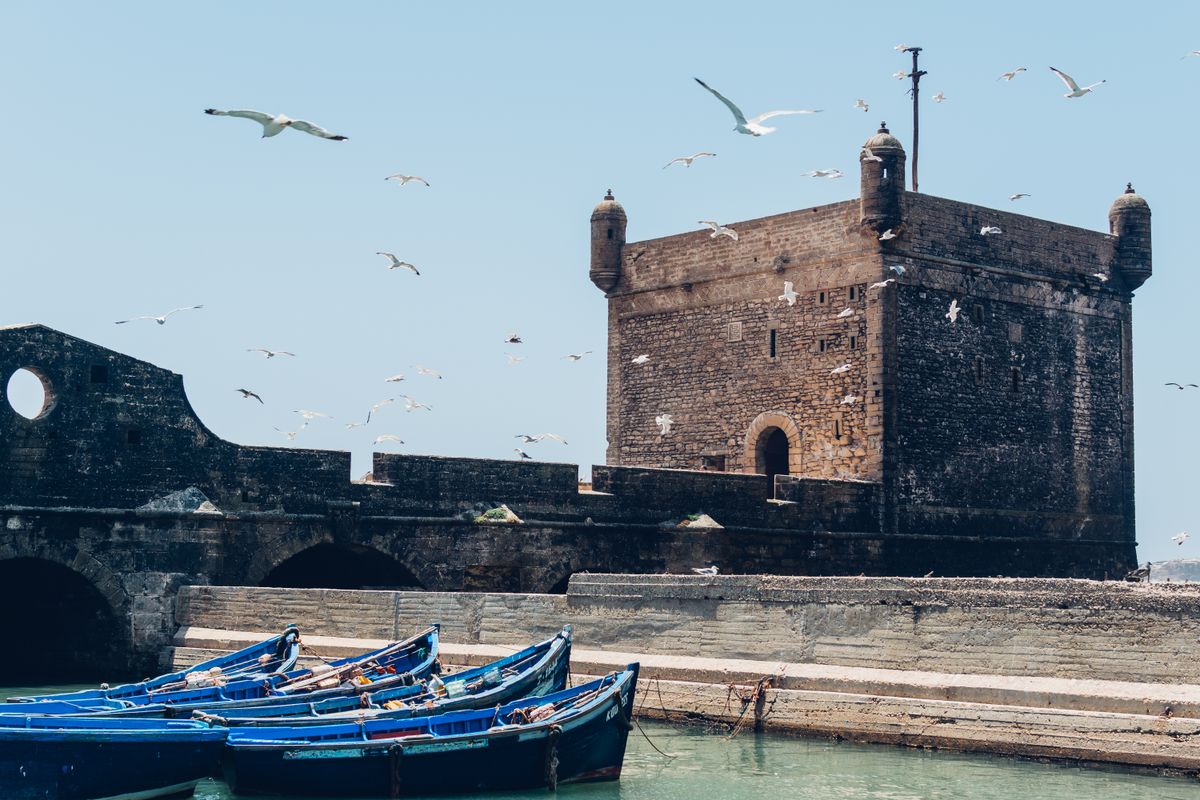
The sea-facing fortifications are the town's signature view. A long rampart lined with old bronze cannons looks straight out over the crashing Atlantic, and the weathered stone glows at golden hour. Film fans may recognize the walls, which stood in for the city of Astapor in a well-known fantasy television series.
The port and the blue boats
Essaouira's working harbor is a riot of color and noise. Rows of small wooden fishing boats, painted a bright cobalt blue, bob against the quay while gulls wheel overhead. Nearby, simple grills cook the morning's catch, and buying fresh fish here is a classic Essaouira experience.
The Medina and its artisans
Inside the walls, the Medina is calmer and more orderly than the souks of Marrakech. Narrow lanes open onto small squares, and workshops specialize in thuya wood carving, a fragrant local craft. It is an easy place to browse, buy a small souvenir and stop for mint tea without feeling pressured.
Why Essaouira feels so different from Marrakech
The secret is the wind. Essaouira sits in the path of steady Atlantic trade winds, which earned it the nickname the Wind City of Africa. Those breezes keep the town noticeably cooler than Marrakech, especially in high summer, and they turn the beach into a magnet for kitesurfers and windsurfers.
The same winds shape daily life. Mornings are often calm and bright, while afternoons pick up a brisk edge, strongest from late spring through summer. Pack a light jacket even on a warm day, and you will be comfortable walking the exposed ramparts and the open harbor front.
Practical tips for your day trip
A little planning makes the day smoother. Keep these points in mind before you set off:
- Start early. An early departure from Marrakech gives you the most time on the coast and beats the heat on the drive.
- Dress in layers. It is warm inland and breezy by the sea, so a packable jacket earns its place in your bag.
- Carry some cash. Small cooperatives, port grills and medina stalls often prefer cash over cards.
- Wear good shoes. The ramparts, port and medina are best explored on foot over uneven stone.
- Leave time for lunch. A long seafood lunch by the water is part of the experience, not a detour.
How to plan the trip
You have two broad options: self-drive or a guided tour. Renting a car gives you freedom, but it also means navigating city traffic, parking outside the Medina and watching the clock on the return leg. For a single day, many travelers prefer handing the logistics to someone else.
A private guided day tour removes the stress entirely. A local driver handles the route, timing and stops, so your only job is to enjoy the coast. Visit Around Morocco runs private day trips and multi-day itineraries built around exactly this kind of experience, pairing the Essaouira run with the argan stops and port highlights that make the day memorable. A private trip also lets you set the pace, linger longer at the port if the light is good, and add or skip stops based on what you most want to see.
Is a day trip enough, or should you stay overnight?
A single day is plenty to see the ramparts, the port and the Medina at a relaxed pace, and most travelers leave satisfied. If you fall for the slow coastal rhythm, you can always return for an overnight stay on a future visit, when you can watch the sunset from the walls and catch the harbor waking up at dawn. For a first taste, though, the day tour hits every highlight without eating into the rest of your Marrakech plans.
However you travel, a day tour to Essaouira from Marrakech is one of the simplest ways to add an Atlantic chapter to your Moroccan trip. If you have a free day in your Marrakech schedule, book the Essaouira run next, pack a light jacket, and let the sea air do the rest.
Frequently asked questions
How long is the drive from Marrakech to Essaouira?
The journey is roughly 175 km and usually takes 2.5 to 3 hours each way on a well-surfaced highway. Allowing for photo stops, plan a full day door to door.
Is a day trip to Essaouira from Marrakech worth it?
Yes. Even with the drive, you get several hours to explore the UNESCO Medina, the harbor and the ramparts, plus an argan stop along the way. It is one of the most rewarding day trips from Marrakech.
What should I pack for a day in Essaouira?
Bring a light jacket or windbreaker because the coastal breeze is constant, comfortable walking shoes for the medina, sunscreen and some cash for the port fish grills and cooperatives.
What is the best time of year to visit Essaouira?
Spring and autumn offer pleasant temperatures with gentler winds. Summer is popular as a cooler escape from Marrakech, though afternoon winds are strongest from May to September.
Can I see argan goats on the way to Essaouira?
Often, yes. The road passes through argan country where goats climb the low trees to reach the fruit, usually during the warmer months. Sightings are seasonal and never guaranteed.